
Au Pair Brand Campaign
Cultural Care Au Pair is the world's leading au pair agency, founded in 1989 and based in the US. Over 35+ years, they have matched more than 175,000 au pairs from over 30 countries with American host families.
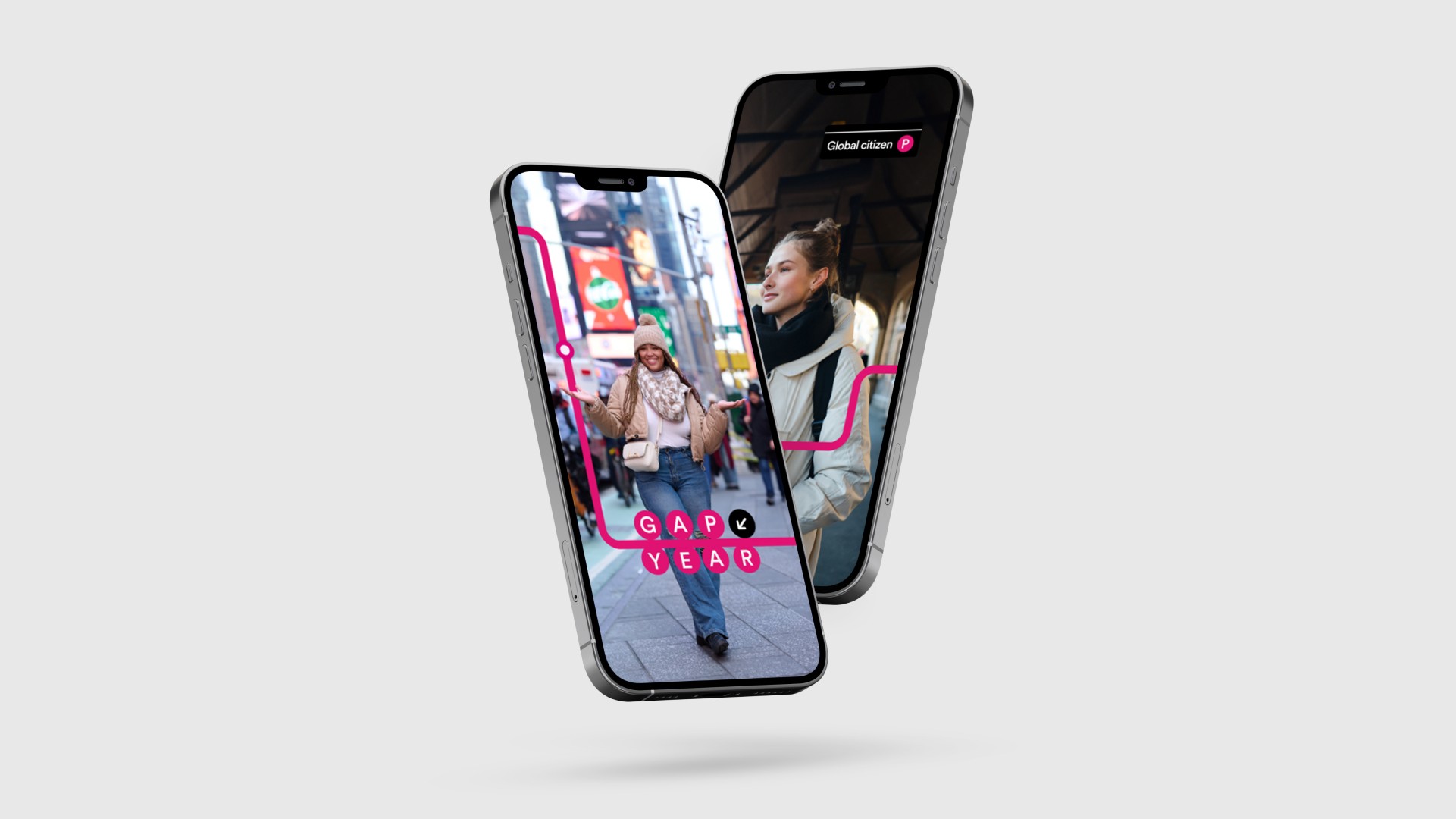
2 weeks
Brand Designer
Marketing Manager
Goal
Captures graduating students at their moment of decision-making ("What's next?") and positions a gap year as an au pair as a valuable, transformative option between high school and university or between bachelor's and master's degrees.
Primary objective: Lead generation (new applicants)
Secondary objective: Brand awareness among students/families making education decisions
Challenge
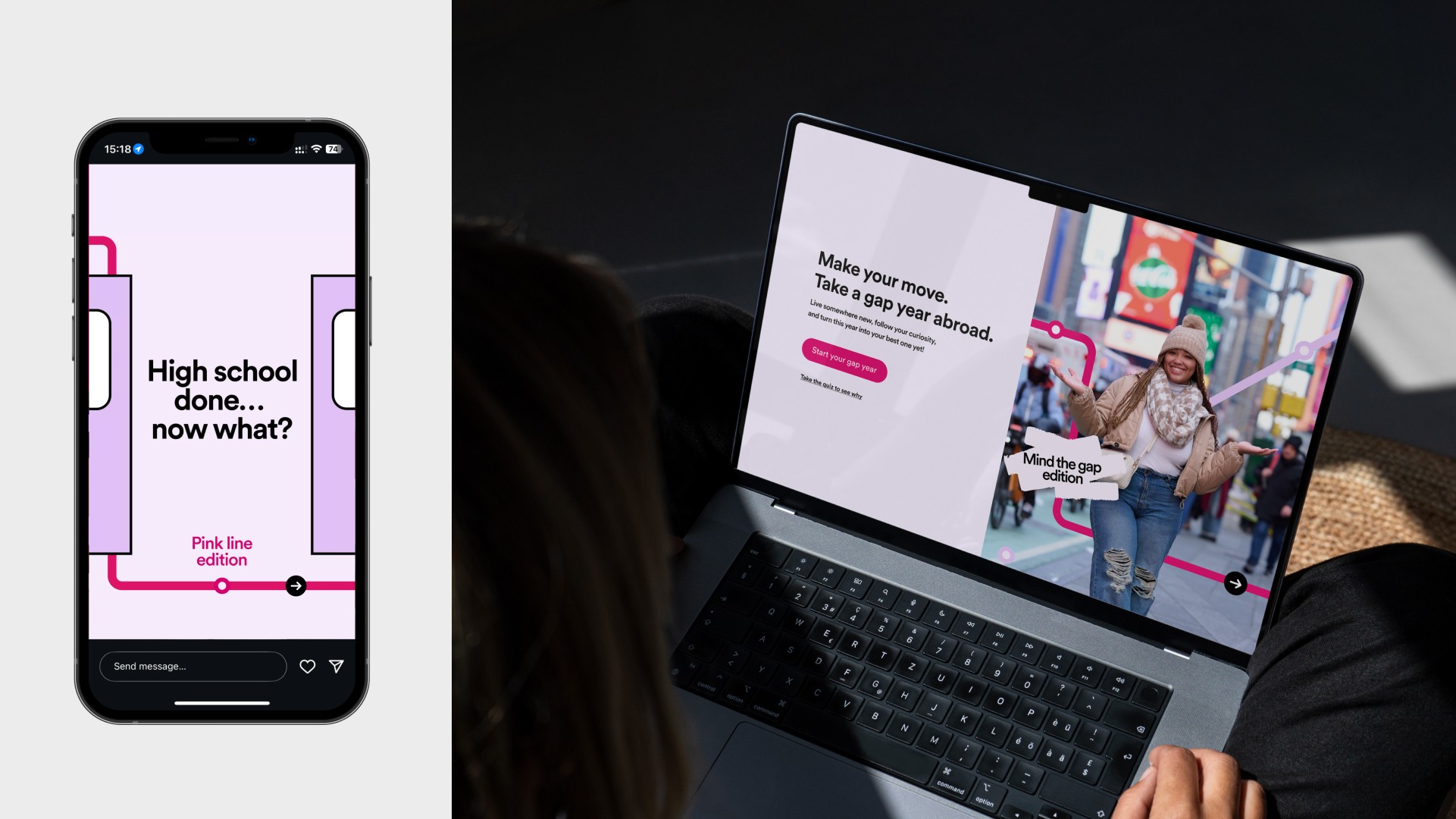
For most graduating students, a gap year carries a stigma - it reads as falling behind or lacking direction. The challenge was to reframe it entirely: position a year as an au pair not as time off, but as strategic preparation. Gain confidence, improve English, earn money, and return ready for the next academic step.
The campaign needed to meet students at their most anxious moment of decision-making and offer a productive, adventurous alternative to rushing into the next degree
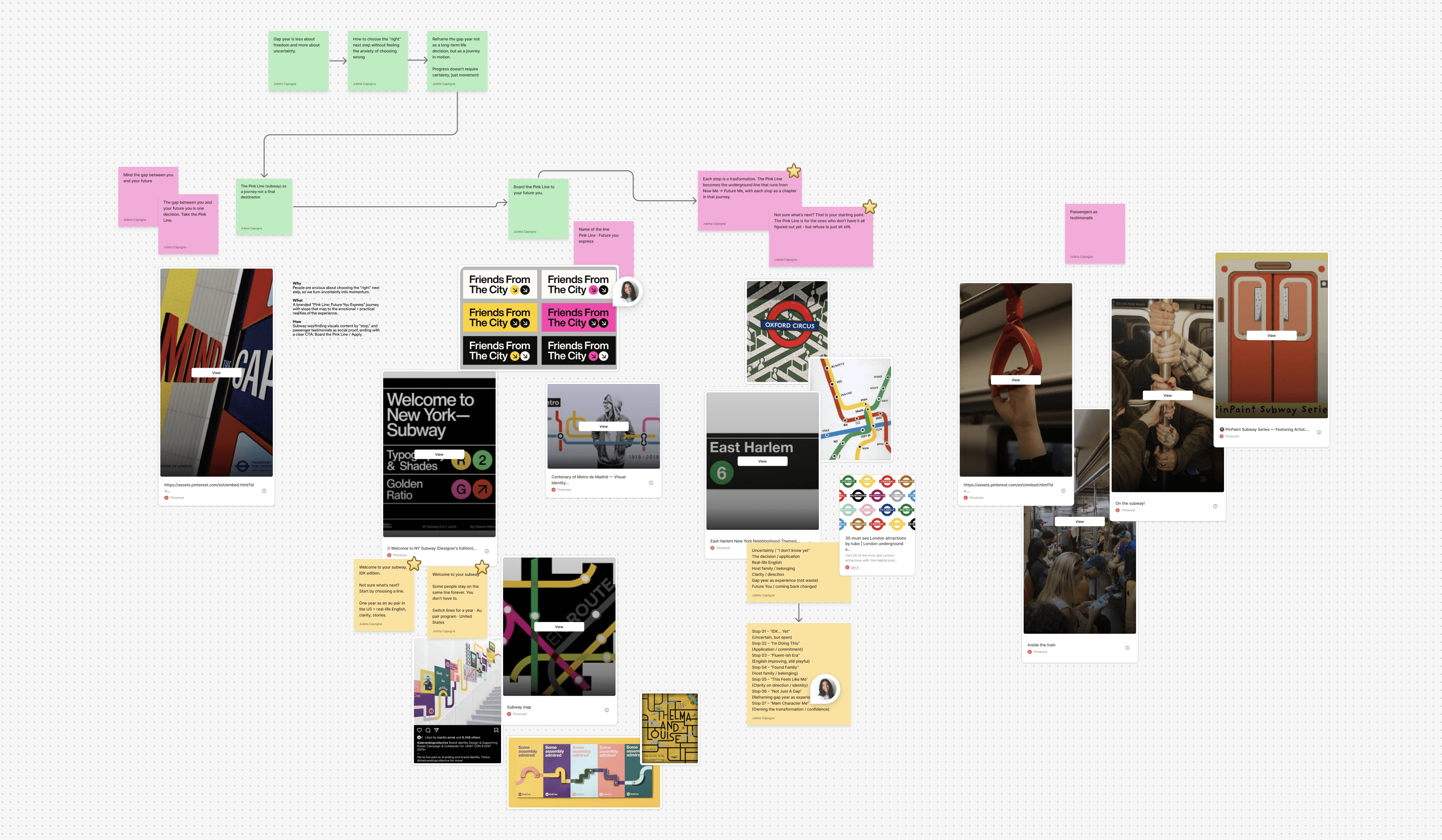
Brainstorming began with collecting references and researching how to connect the campaign message with a visual direction that would resonate with our target audience.
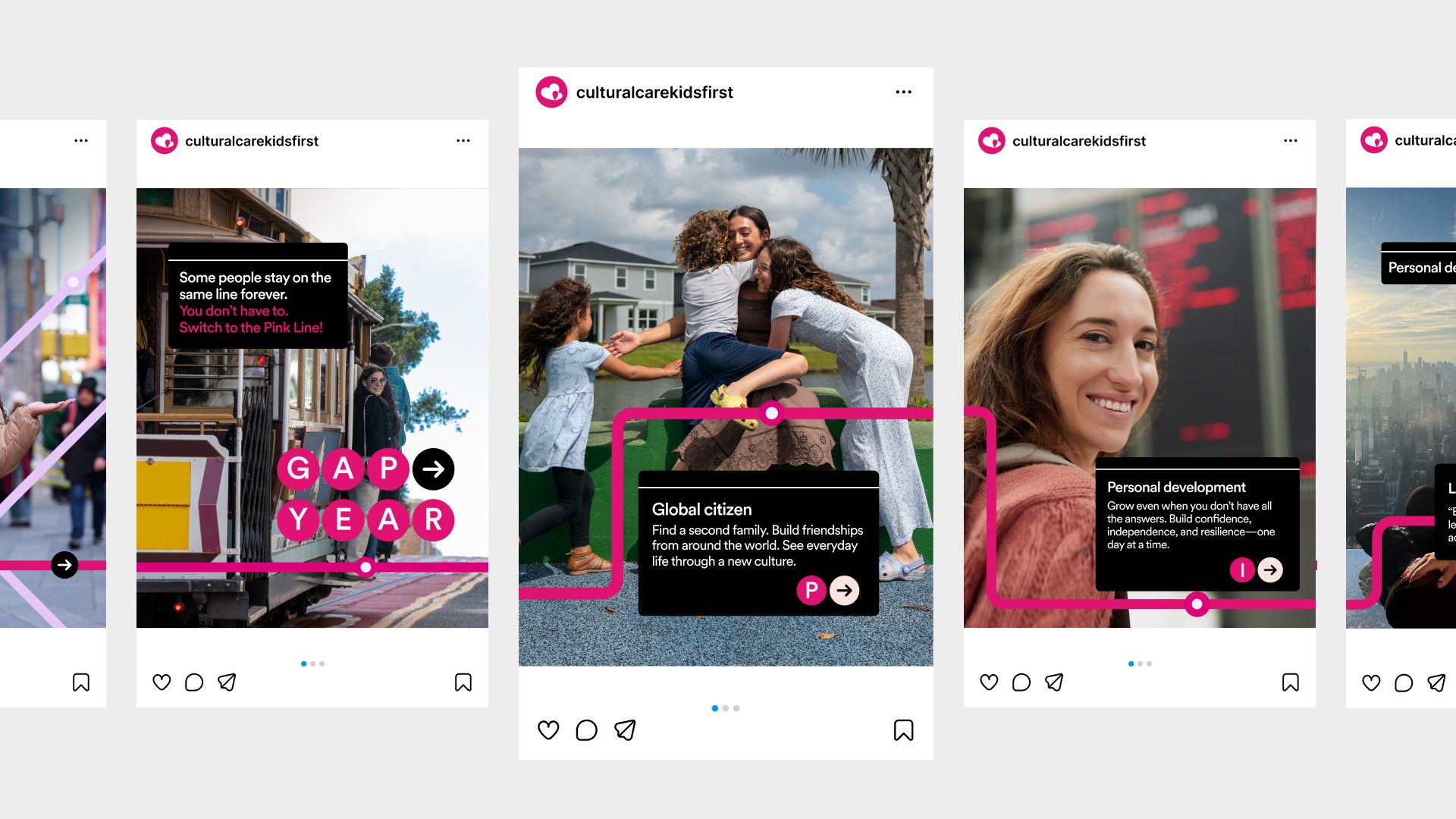
Feed carousel designed to spark reflection on life after school, highlighting the unique perks of a gap year with ambassador testimonials.
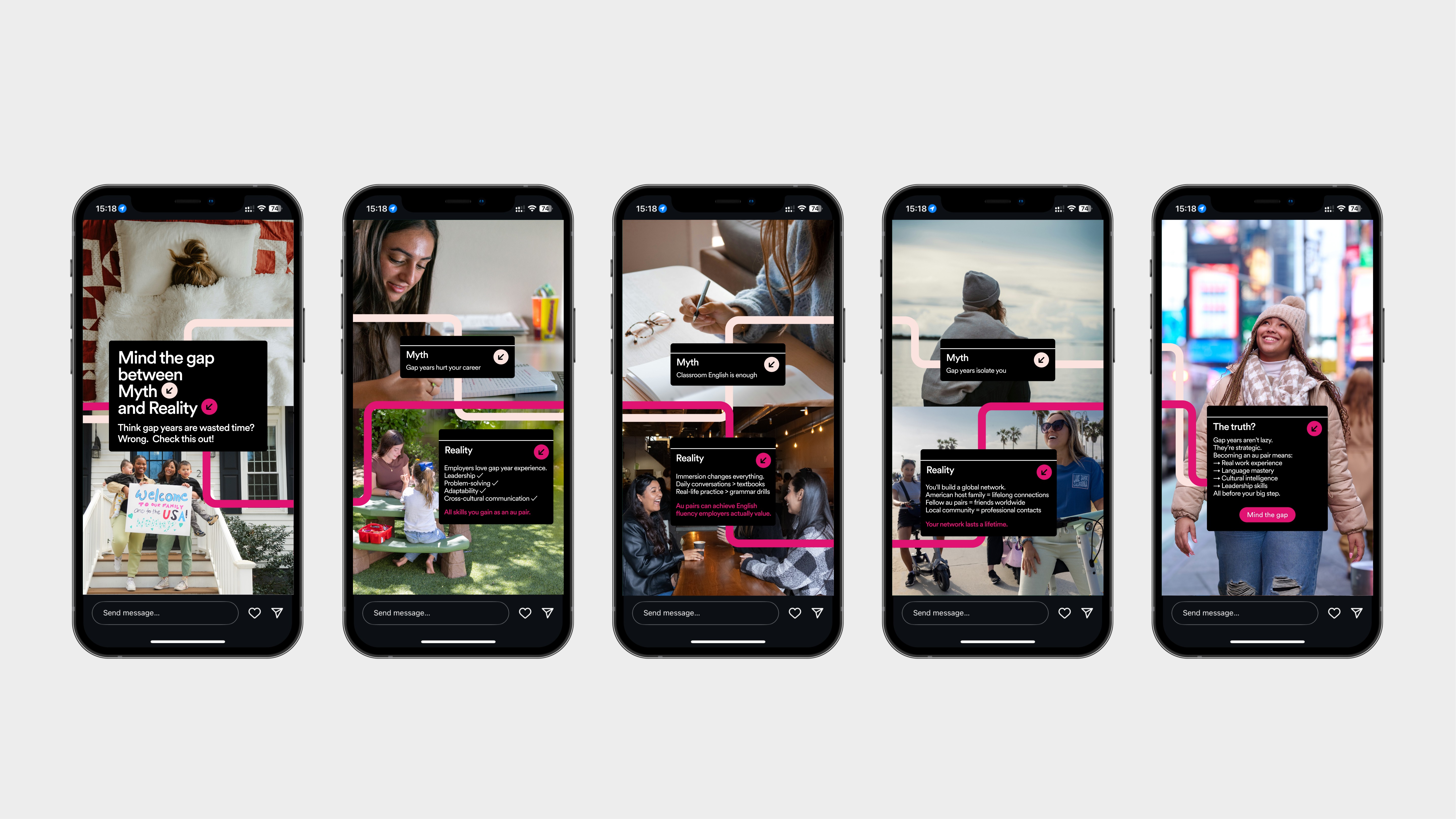
Story series - "Myth vs. Reality" Challenges the misconceptions about gap years and positions becoming an au pair as an intentional, career-building choice.
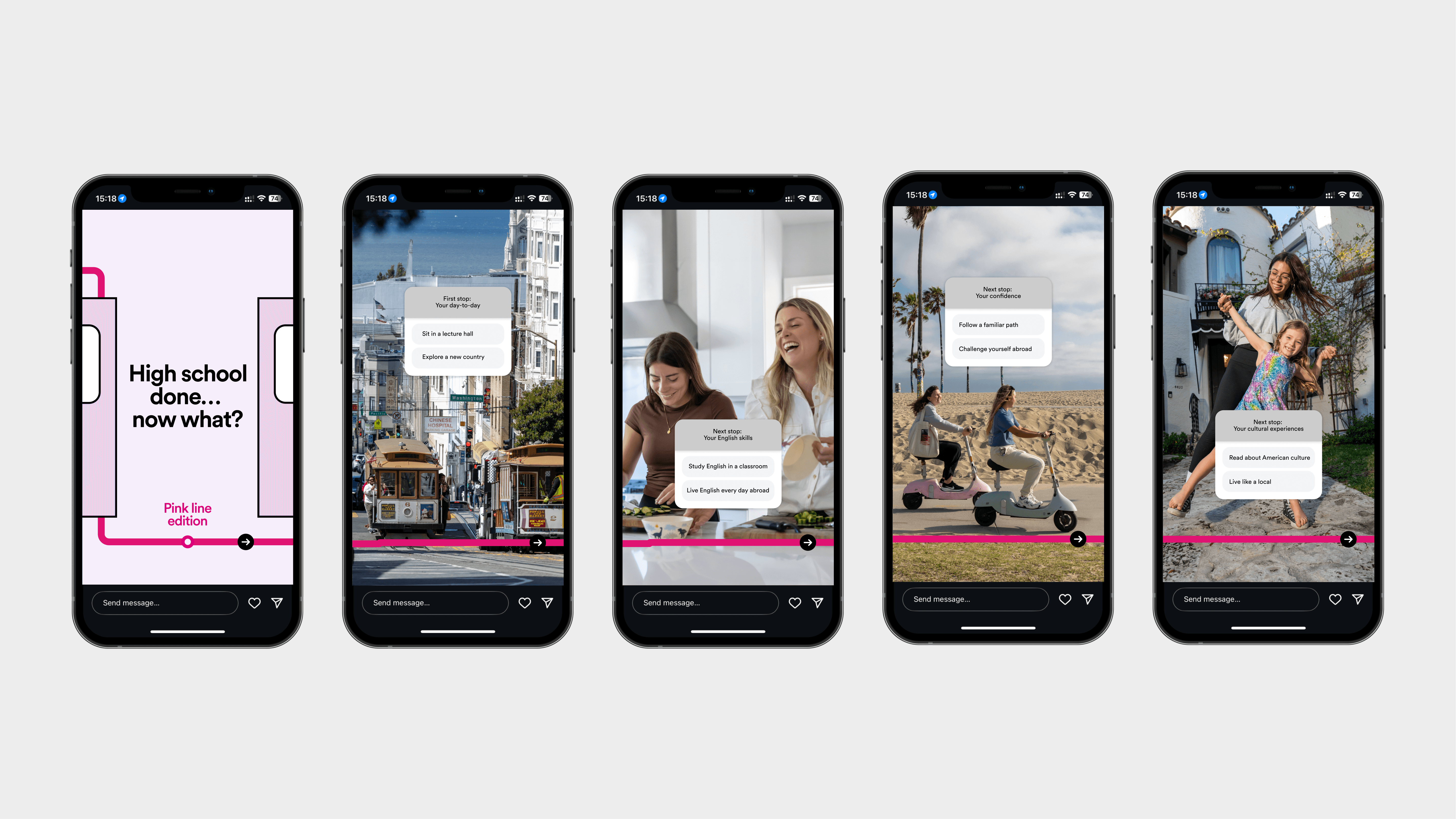
Story series - "This or That" An interactive story series asking graduates, “What’s next after uni or high school?” through a set of “this or that” scenarios that subtly introduce and inspire the idea of taking a gap year as an au pair.
Key takeaway
The biggest lesson from this campaign was that reframing the brief is the real creative work. The challenge wasn't to design social assets, it was to change how a generation perceives a gap year. The most important decision was finding a metaphor that turned anxiety into direction. Once the Pink Line concept was right, everything else followed naturally - the visuals, the copy, the CTAs all clicked into place around a single, coherent idea. That's the value of starting with strategy: when the concept is strong, the system builds itself.